

Breathwork & Mindfulness
Same-same, but different

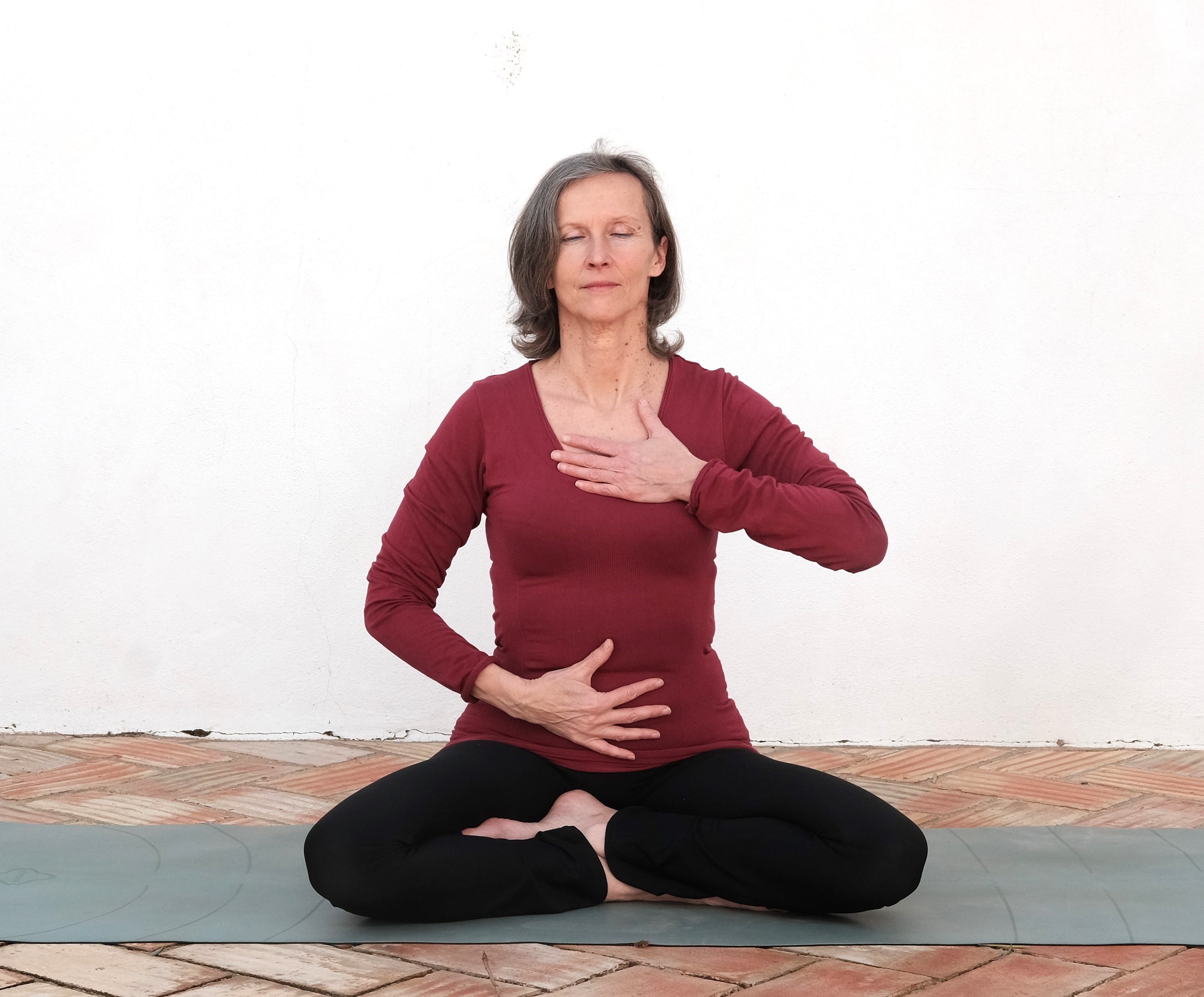
As a Breathwork facilitator, I´m often asked what´s the difference between these two modalities. My short answer is that both acknowledge the close connection between the mind and the body and both involve conscious awareness of the breath but the techniques and goals are dramatically different.
Same same… Breathwork, Mindfulness & Relaxation
Mindfulness became popular in the West after Jon Kabat-Zinn created the Mindfulness-Based Stress Reduction (MBSR) 8-week program in the 1970s. This program has helped patients deal with anxiety, stress, pain etc. as confirmed by myriads of research projects. It is now a well-established intervention to support patients. However, I would like to argue that mindfulness has been practised for thousands of years and is not just about relaxation.
The same is true of breathwork. Yes it can be used to enhance relaxation but not only. For me both mindfulness and breathwork are ‘tools’. If we consider a tool like a knife. It can be used to slice bread, spread butter, pierce a plastic bubble… and probably many other things. The same is true of modalities like breathwork and mindfulness. They are tools and you can use them in different ways to reach different purposes.
When it comes to relaxation, a group of researchers, including Andrew Huberman and David Spiegel, conducted a remote, randomized, controlled study of three different daily 5-min breathwork exercises compared with an equivalent period of mindfulness meditation over 1 month. The results were published in Cell Reports Medicine in January 2023. They concluded that:
Both modalities are efficient to reduce anxiety (doing 5 minutes of breathwork and mindfulness meditation every day works)
Participants felt more relaxed after breathwork than after mindfulness, especially if the session includes sighing.
What does it mean? Should we all walk around sighing the all day long? Maybe not, although I agree we should consider sighing as a wonderful recovery loop. Personally I think we should learn to use both these tools and decide which works best for us in any given situation.
… But different
As I mentioned earlier, mindfulness is not just about relaxation. In fact, the aim of mindfulness in many traditions is not to relax but to cultivate present-moment awareness, to observe thoughts and sensations without judgment and to develop a sense of equanimity. It might be relaxing sometimes but not always. We typically observe the breath without attempting to change it.
Breathwork, on the other hand, most of the time includes changing the breath. There are a variety of specific breathing techniques designed to bring about certain physiological and emotional states. It can involve rhythmic breathing, deep diaphragmatic breaths, or specific patterns of inhalation and exhalation. The aim might be to breathe better, increase energy, enhance relaxation, release emotional tension, or induce altered states of consciousness.
So the goals are definitely not the same, and can go beyond relaxation.
Beyond Relaxation
Last July, I wrote a post called ‘Why Relaxation is Not Enough’. This topic fascinates me. I started to question the rationale behind focusing solely on relaxation when I noticed how some of my yoga students who love doing relaxing breathing techniques feel really uncomfortable when we do more ‘energising’ techniques.
Why do we then focus so much on relaxing? Of course it is essential to know how to relax but shouldn’t we also learn to be ok with our discomfort? Shouldn’t our focus be to reach equanimity, to develop the ability to switch from active to passive mode, from stress to relaxation? Isn’t it the best way to build resilience?
I´d like to share a little experiment I did (on myself!). Last year, I had a few old tooth fillings removed and exchanged for non toxic material, one at a time, without anesthetic. At the beginning, I practised my breathing exercises to relax and I could cope with the pain. On the last session, I decided to change my approach and instead of trying to relax, I decided to face the pain. I actually waited for the pain. Then I observed it, asking myself questions like ‘How far can you feel the pain? How would you describe it? If it were an animal, which animal would it be?’
Do you think I’m crazy?
Maybe but it worked so much better than trying to relax! My dentist - who is amazing- was a bit surprised because this was the deepest filling I had but I remained completely still. It should have been more painful than the previous ones. In this case, my mindfulness practice clearly helped me more than breathwork!
In my experience, mindfulness is the best way to learn that fundamental skill. Rather than to try and relax all the time, it is often more useful to learn to be ok even when life gets tough.
Active Mindfulness
Have you ever explore the active parts of mindfulness? People sometimes think of mindfulness as being passive - even boring. You do nothing. Nothing happens. But in fact, observing the mind, the breath or the sensations is far from boring and so much happens… (even when you are sitting on the dentist chair!)
Would you like to learn more about it? I am absolutely thrilled to announce that Taming the Walrus is hosting a 5-week course with Dr Phil Startin, starting on January 22nd. Phil prepared a fantastic program about the art of active mindfulness. I cannot wait to join him on the 22nd. No worry you won´t have to inflict pain on yourself … but Phil will guide through through practices that will show you another side of mindfulness-
To sign up for this online course, click HERE. Please don´t hesitate to contact me if you have any questions (tamingthewalrus@gmail.com.
Finally, I encourage everyone to explore both mindfulness and breathwork to relax but also to explore how to live a fuller happier life and find out what works best for you at different stages of your life, your day… Both are tremendously useful modalities that can make life so much easier.
Much love
Veronique